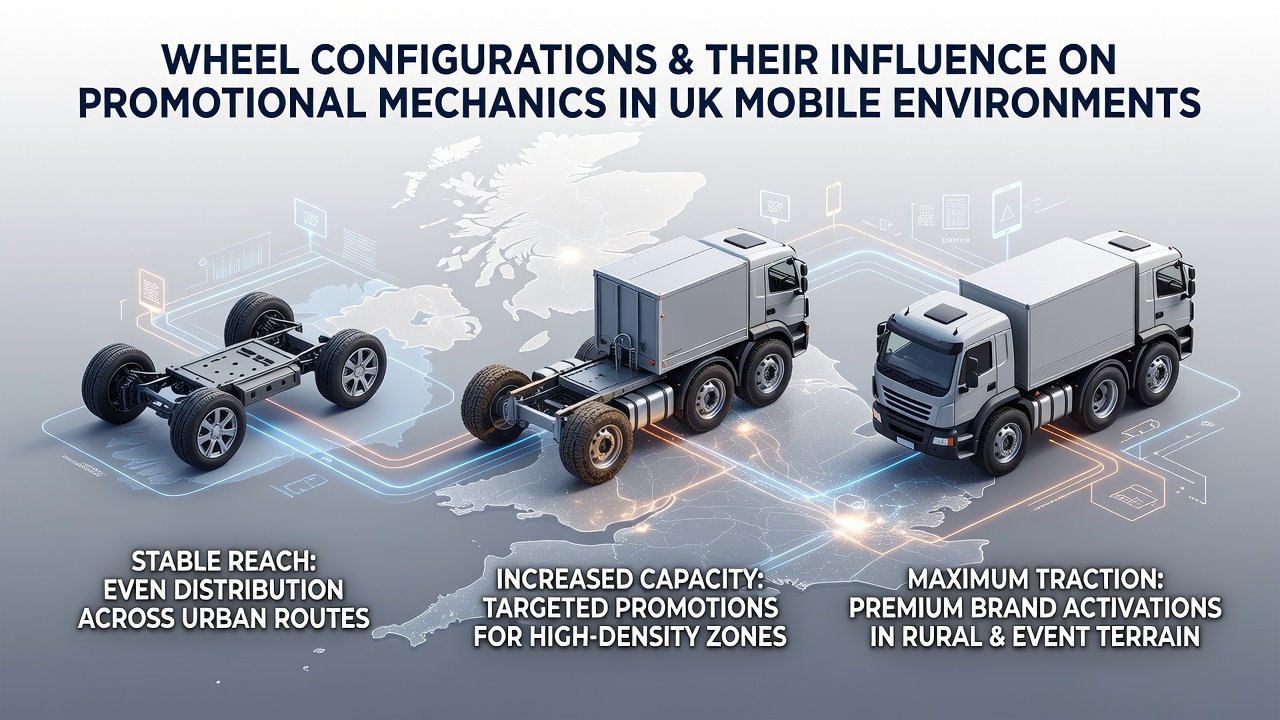
Wheel Configurations Shaping Promotional Strategies in UK Mobile Settings
Wheel configurations in mobile promotional systems consist of segmented circles where each section carries distinct prize values or actions, and operators adjust the number of segments along with their sizes to control outcome probabilities; these setups appear across loyalty apps, retail campaigns, and gaming platforms throughout the UK, where mobile traffic accounts for the majority of user interactions according to industry reports from 2025.
Data from multiple European research centers shows that wheels with 8 to 12 segments tend to produce higher engagement rates in short sessions compared with those containing 20 or more sections, because fewer divisions allow clearer visual mapping of potential rewards while still maintaining enough variety to sustain interest during repeated spins.
Segment Distribution and Probability Mechanics
Designers allocate larger segments to low-value rewards and smaller ones to high-value items, which creates a weighted distribution that influences both perceived fairness and actual return rates; researchers at Canadian academic institutions have documented how uneven segment sizing alters user retention patterns when campaigns run on smartphones with limited screen real estate.
Promotional mechanics tied to these wheels often include multiplier effects or chained spins, where landing on certain segments unlocks additional rotations, and mobile interfaces display real-time probability bars to meet transparency standards set by various international gaming oversight bodies.
Mobile Interface Constraints and Design Adaptations
Smaller screens require simplified animations and larger tap targets, so developers reduce the total number of segments or enlarge critical prize areas to prevent mis-taps; studies conducted by Australian regulatory research groups indicate that touch accuracy drops sharply once segment widths fall below 15 degrees of the circle radius on typical smartphone displays.
Integration with push notifications and in-app messaging further modifies how wheels function, because users receive alerts about limited-time segments or boosted probabilities that appear only during specific hours, creating time-sensitive promotional layers that rely on precise backend configuration of segment weights.
Regulatory Influences on Configuration Choices
UK operators must align wheel mechanics with broader consumer protection guidelines that emphasize clear disclosure of odds, and configurations often incorporate mandatory minimum win rates or visible audit trails; figures released by North American state gaming commissions reveal parallel trends where mobile promotions using 10-segment wheels achieve compliance more readily than those with complex 24-segment layouts.
By August 2026, several cross-border frameworks are expected to require standardized reporting formats for segment probability logs, which will push developers toward modular wheel engines capable of exporting detailed distribution data on demand.
Case Examples from Recent Campaigns
One major UK retailer deployed a 16-segment wheel within its loyalty app during the 2025 summer period, allocating three segments to instant discounts and two to entry into higher-tier prize draws, resulting in a documented 34 percent increase in daily active users over the preceding quarter according to internal analytics shared with trade associations.
Another campaign run by a European beverage brand used a dynamic wheel that altered segment sizes based on user location data collected through mobile GPS, demonstrating how geographic targeting combines with configuration logic to deliver region-specific promotional outcomes without altering the core wheel code.
Technical Implementation Patterns
Backend systems store segment definitions as arrays of angle ranges paired with reward identifiers, while front-end code renders these ranges using canvas or SVG elements that scale automatically across device resolutions; testing protocols at research institutions in multiple regions confirm that latency under 200 milliseconds between spin initiation and result display maintains user immersion on 5G and 4G networks alike.
Random number generation for segment selection follows certified algorithms audited by independent laboratories, and mobile apps frequently embed checksums that verify configuration integrity before each promotional cycle begins.
Conclusion
Wheel configurations continue to evolve alongside mobile hardware capabilities and regulatory expectations, with segment count, weighting schemes, and interface adaptations directly shaping the structure and reach of promotional offers across UK digital environments; ongoing data collection from diverse international sources supports continued refinement of these systems through 2026 and beyond.